IRM CSO Advocacy Grant: Reflections from Zimbabwe with ZELO
This blog was written by Hillary Mugota, ZELO Project Office and Batanai Mutasa, ZELO Media and Communications Officer. Zelo was one of five Civil Society Organisations (CSOs) selected to receive the 2025 IRM CSO Advocacy Grant.
The journey to raise awareness about the Independent Redress Mechanism (IRM) and the Green Climate Fund (GCF) started as a simple goal for the Zimbabwe Environmental Law Organisation (ZELO). The team working on this set out to demystify the IRM mechanisms and make them accessible to communities most affected by climate change in Zimbabwe – a simple yet ambitious goal. We only realised the magnitude of the task as this initiative took shape across multiple platforms, at times we had to change strategies, adapt and be a little disruptive to ensure the message was understandable in all formats.
From the onset, we had to decide on a base product as a point of reference for the whole initiative and selected factsheets. Thus, the first activity involved compiling, designing, and distributing IRM factsheets. The true magic was in designing the factsheet, combining text with graphics to explain not only the redress mechanism but associated concepts such as climate change and the Green Climate Fund. Easy on the eye, these quick-to-read materials explained what the Independent Redress Mechanism is, why it matters, and how communities can access it in a page. Shared on social media platforms including WhatsApp, the ZELO newsletter, X (formerly Twitter), and LinkedIn, the factsheets proved effective in reaching diverse audiences that included government stakeholders, GCF project host communities in Manicaland, Masvingo, Chipinge, Gwanda, Chimanimani, and Insiza, and ZELO’s broader network.
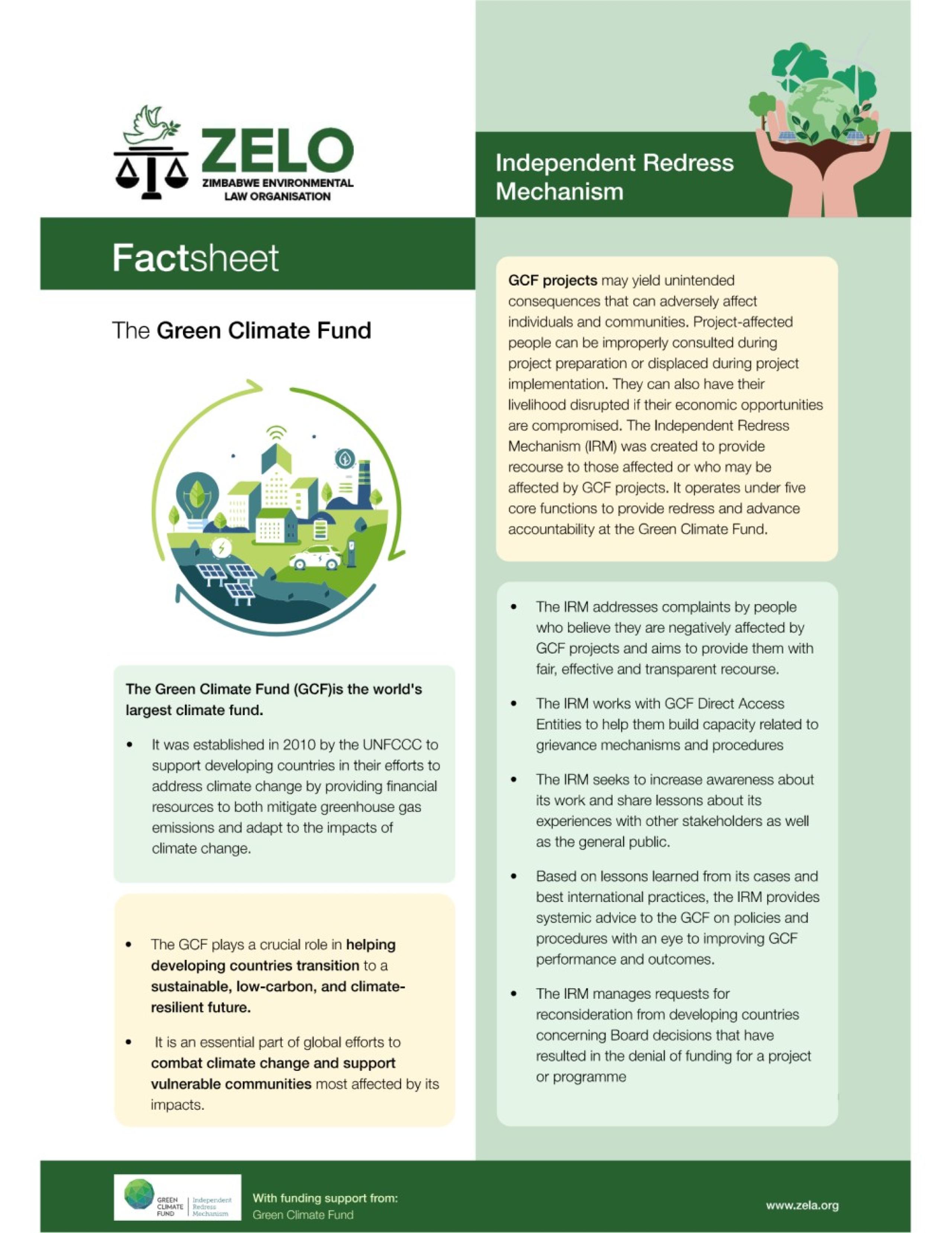
The numbers were encouraging. On X, the posts generated over 1,000 impressions with strong engagement, while LinkedIn, recorded a 14.4% engagement rate, well above typical averages. These results show that climate governance content, though usually technical, can resonate widely when it’s presented in relatable and visually appealing ways.
As the initiative was being conceptualised, the team always intended to take IRM dissemination messages on air to leverage on the reach of radio. Here, project came alive. Building in the IRM factsheets, radio sessions were the second activity in partnership with Hevoi FM, a community radio station in Masvingo province. Initially designed as interactive broadcasts, the activity evolved after consultations with Hevoi FM and out of the factsheets, infomercials in English and Shona were produced. These infomercials were broadcast repeatedly on the radio station which transmits across nine districts in Masvingo province and parts of parts of Midlands and Manicaland provinces, reaching nearly 900,000 listeners.
The shift from a once-off session to repeated broadcasts ensured sustained awareness and inclusivity while translating the content into local languages helped bridge knowledge gaps and grounded global concepts such as climate finance and redress mechanisms in local realities.
“This project taught me that true localization goes beyond translation. It’s about making sure the message connects with how people live and think,” said Roseline Venencia Mutare of Hevoi FM who led the production of infomercials. Her experience mirrored the core spirit of this project: building capacity, not just spreading information.
Building on the radio infomercials, the third activity extended our multimedia approach into visual storytelling. We transformed the radio content into a YouTube infomercial, packaging it with engaging visuals to create a cohesive video. This format allowed us to simplify complex ideas about the IRM into an accessible narrative, illustrating how communities can use the mechanism to seek fair resolutions in GCF-funded projects.
Creating the video came with its own set of challenges. Sourcing images that accurately reflected the content proved more time-consuming than anticipated. In the end, however, the process deepened our understanding of what it truly takes to communicate technical information effectively.
Working alongside communities and media partners across Zimbabwe reinforced the power of participatory communication. As ZELO Media and Communications Officer Batanai Mutasa observed:
"Explaining the IRM often meant starting from the basics - climate change itself, how the GCF works, and why redress matters. The moment we reached shared understanding was incredibly rewarding."
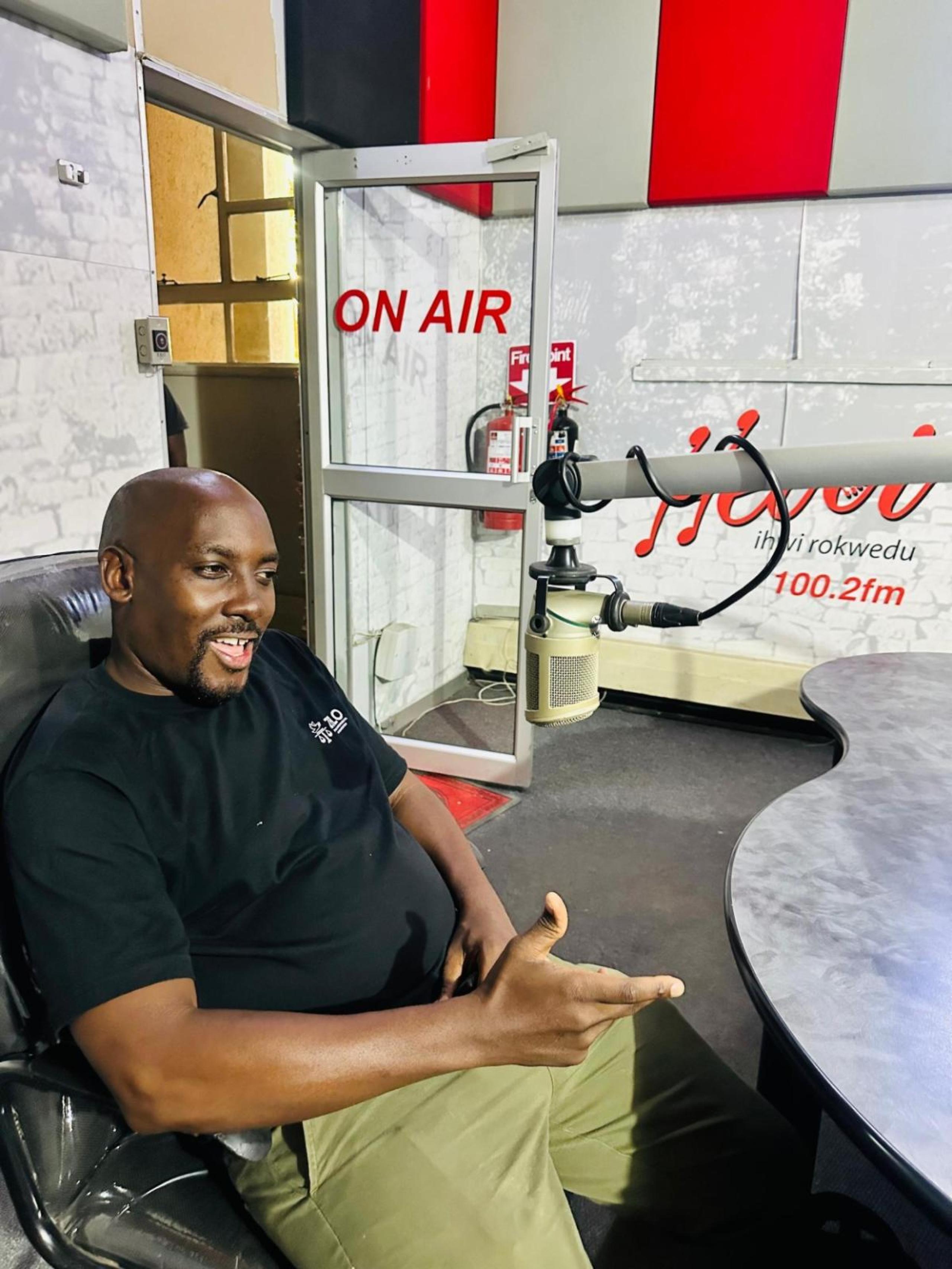
The ZELO team also constantly noted that engaging directly with community voices, from radio producers to local listeners, reminded us why this work matters. Every question, every moment of realization, brought us closer to our mission of ensuring that climate justice mechanisms are more than abstract policies, but living tools for people's empowerment. This experience underscored that building awareness is an iterative process, one that demands patience, genuine collaboration, and a willingness to learn along the way.
Looking Ahead
The Independent Redress Mechanism awareness project has shown that when information is accessible, inclusive, and based on dialogue, it can ignite meaningful change. We now move forward with new insights, a stronger communication strategy, and a deeper appreciation for the communities we serve. If you are reading this and work with communities affected by climate related projects, consider sharing IRM resources, playing the radio infomercials where possible, or using the video as a training or discussion starter in your own networks. To community members, we invite you to keep asking questions, seeking clarity, and insisting that climate action respects both people and the environment, because sustained accountability begins with voices like yours being heard.